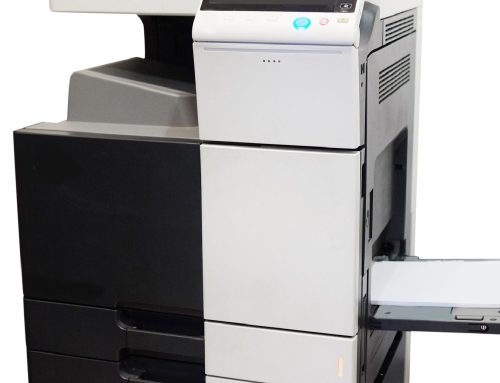
Today, a commercial copier is no longer just a mechanical box that duplicates paper. It has evolved into a highly sophisticated Multi-Function Printer (MFP) that acts as the central nervous system of your office's entire document workflow.
Whether you are running a creative agency in Cape Town that requires high-resolution A3 colour proofs, managing an accounting firm in Johannesburg that needs rapid, high-volume document scanning, or outfitting a hybrid work hub in Durban, choosing the right machine is critical. Make the wrong choice, and you will be stuck with constant paper jams, bloated maintenance bills, and deeply frustrated staff.
To help you navigate this complex procurement process, we have compiled the ultimate, in-depth buying guide by consolidating top industry insights. Here is a comprehensive breakdown of everything you need to consider when choosing a copier, MFP, or photocopier for your South African business.
1. Assess Your True Print Volume (The Foundation)
The most common—and costly—mistake businesses make is buying a machine that does not accurately match their actual output needs. If you buy an under-specced machine for a busy office, you will wear out the engine prematurely and face continuous breakdowns. If you buy a massive production unit for a small team, you are burning capital on capacity you will never use.
Before looking at brands or price tags, you must calculate your Monthly Print Volume. The easiest way to do this is to check your office paper supply. If you buy a standard box of paper (which usually contains five reams of 500 sheets), that equals 2,500 pages. How many boxes do you go through a month?
- Low Volume (1,000 - 3,000 pages): A robust desktop multi-function printer or entry-level A4 floor unit will comfortably suffice.
- Medium Volume (3,000 - 10,000 pages): You need a mid-range A3 office copier built with durable internal components designed for continuous daily use by multiple staff members.
- High Volume (10,000 - 30,000+ pages): You are in the market for a high-end commercial copier. These machines feature massive toner yields and heavy-duty paper paths to prevent jams during massive print runs.
Technical Tip: Always look at the "Recommended Monthly Print Volume", not the "Maximum Duty Cycle." The maximum duty cycle is the absolute stress limit the machine can hit in a single month before failing. The recommended volume is what the machine is actually engineered to handle day in and day out without requiring excessive service calls.
2. Decide Between Monochrome (Black & White) and Colour
Do you really need to print in colour? This is a crucial financial question because colour copiers are not only more expensive to purchase, but their ongoing running costs (the cost per page) are significantly higher due to the need for four separate internal imaging drums and toners (Cyan, Magenta, Yellow, and Black).
- Monochrome Copiers: Perfect for logistics companies, legal practices, schools, and administration hubs that primarily print invoices, picking slips, text-heavy contracts, and internal memos. They are faster, cheaper to maintain, and highly reliable.
- Colour Copiers (Business Colour): Suitable for general corporate environments that occasionally need to print charts, letterheads, and basic presentations.
- Graphic Arts Colour Copiers: Essential for marketing departments, real estate agencies, and design studios. These machines offer superior colour calibration and high-resolution output (1200 x 1200 dpi) for professional client-facing proofs.
Cost-Saving Tip for SA Businesses: If you must buy a colour machine for occasional use, have your office automation vendor lock the default network print driver settings to black-and-white. Require users to manually select "colour" for specific jobs. This single step can slash your monthly consumables bill in half by preventing staff from printing everyday emails in colour.
3. Key Features and Technical Specifications
When figuring out how to choose a photocopier, you need to match the machine's technical specifications to your team's specific workflow bottlenecks. Evaluate the following core features:
Print Speed (Pages Per Minute - PPM)
Print speed dictates how fast your machine spits out a document. Faster isn't always better if your volume is low, but it is vital for eliminating printer queues in busy offices.
- 20 - 30 PPM: Sufficient for small teams (1-5 users) where print jobs are short and intermittent.
- 35 - 50 PPM: The sweet spot for most medium-to-large corporate offices, easily handling 50-page reports in a minute.
- 60 - 90+ PPM: Necessary for centralized print rooms, schools, or law firms printing massive tender documents, exams, or case files.
Document Scanning and ADF Capabilities
In the modern digital office, employees often scan more documents than they print. An Automatic Document Feeder (ADF) allows you to place a stack of pages on top of the machine, and it will automatically pull them through the scanner.
If scanning is a priority, look specifically for a Dual-Scan Document Feeder (DSDF) or a Single-Pass Duplex Scanner. Unlike a Reversing ADF (RADF) which flips the paper over mechanically to scan the back, a DSDF has two scanning lenses and captures both sides of the page simultaneously in a single pass. This dramatically increases scanning speed (often reaching up to 240 Images Per Minute) and reduces paper jams.
Paper Handling and Media Types (GSM)
Constantly reloading empty paper trays is a massive drain on office productivity. Ensure your chosen machine has adequate paper cassettes to hold at least a full ream (500 sheets) per tray. Furthermore, check the machine's media handling capabilities:
- A4 vs. A3: Decide if your business strictly needs standard A4, or if you require A3 printing (ledgers, architectural plans, large spreadsheets). A3 machines are physically larger and carry a higher premium but feature far more robust engines.
- Paper Weight (GSM): If you plan to print on thick cardstock, certificates, or glossy presentation covers, check the machine's maximum GSM (Grams per Square Metre) rating. Standard paper is 80gsm; if you need to print on 250gsm cardstock, ensure the copier's manual bypass tray supports it, otherwise the thick paper will melt inside the fuser unit.
Finishing Options
If you spend hours manually stapling proposals or folding newsletters, a mechanical finisher will revolutionize your workflow. High-end copiers can be fitted with external modules that offer:
- Automatic multi-position stapling.
- Hole-punching (2-hole or 4-hole).
- Booklet making (saddle-stitching and centre-folding).
4. Software Integration and The Hybrid Workspace
A modern MFP should act as an on-ramp to your company's digital infrastructure. Standalone copying is no longer enough.
- Optical Character Recognition (OCR): This is a massive productivity booster. OCR software converts scanned images into searchable, editable text documents (like searchable PDFs or Word documents) rather than just flat image files.
- Cloud Connectivity: Can the machine perform Scan-to-Email, Scan-to-Folder, or directly interface with your company's Google Workspace, Microsoft OneDrive, SharePoint, or Dropbox?
- Mobile Printing: With a hybrid workforce, employees need to print directly from their smartphones and tablets. Ensure the machine supports Apple AirPrint, Mopria Print Service, or features native Wi-Fi Direct capabilities.
5. POPIA Compliance and Network Security
In South Africa, the Protection of Personal Information Act (POPIA) mandates that businesses strictly safeguard client data. Your office copier is essentially a networked computer with a hard drive, making it a massive security vulnerability if left unprotected. It temporarily stores images of scanned, copied, and printed documents on its internal drive.
When choosing a copier, insist on the following enterprise-grade security features:
- User Authentication (Follow-Me Printing): Employees must enter a unique PIN or swipe an RFID access card at the machine to physically release their print job. This stops confidential HR, medical, or financial documents from sitting unattended in the output tray for anyone to read.
- Data Encryption & Overwrite: The machine should automatically encrypt data sent over your Wi-Fi network and feature a "Data Overwrite Security System" (DOSS) that digitally shreds document images from its hard drive immediately after the job is completed.
6. Service Level Agreements (SLAs) and Load Shedding
Even the most premium, highly-rated copier will eventually experience a paper jam, require a new imaging drum, or run out of toner. How your service provider manages this downtime is just as important as the hardware itself.
Understanding the SLA
Never buy or lease a commercial copier without a solid Service Level Agreement (SLA) or Managed Print Service (MPS) contract. An SLA usually operates on a Cost-Per-Click (CPC) basis, where you pay a few cents per page printed (e.g., 8c for mono, 55c for colour). In return, the automation company provides all your toners, spare parts, drums, and on-site technical labour. It completely removes the risk of sudden, massive repair bills.
The South African Grid Warning
South Africa’s power grid is notoriously unstable. Sudden load shedding, voltage dips, and power restoration surges can instantly fry a copier's sensitive electronic controller boards. Furthermore, copiers draw a massive amount of startup current to heat their fuser rollers.
Ensure your SLA provider includes a high-quality surge protector with the installation. If you plan to run the copier during load shedding, you cannot plug it into a cheap modified-sine-wave inverter. You must confirm that your office's UPS or solar inverter is a Pure Sine Wave system and is rated to handle the massive wattage spike (often 1,500W+) when the copier wakes from sleep mode.
Conclusion: Finding Your Perfect Fit
Learning how to choose a copier does not have to be a blind guessing game. By accurately assessing your actual monthly print volume, deciding firmly between colour and monochrome, prioritizing POPIA-compliant security, and backing the hardware with a rock-solid Service Level Agreement, you will secure a machine that drives your business efficiency forward rather than holding it back.
Take the time to evaluate your specific document workflows, consult with your staff on their daily bottlenecks, and lean on the expertise of a reputable local office automation provider to tailor a solution designed specifically for your unique South African enterprise.
The durability of the copy machine depends a lot on what criterias you follow to choose a good one.